view counter

Regulars (Sky Watch by J. Alex Knoll)

Jupiter and Venus bookend the edges of darkness

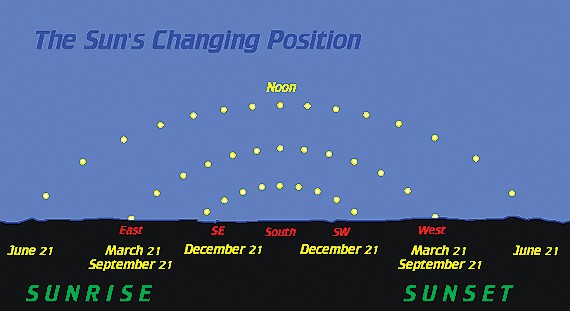
Darkness comes early, as we settle into Standard Time, with the sun setting around 4:55 at week’s end. We passed the mid-point of autumn early this month, and now we shed daylight fast in the march toward winter solstice. Every day until then, we shed almost a minute of sunlight each afternoon, and in the morning, when the sun rises around 6:45 at week’s end, we lose more than a minute each day. But there are plenty of lights to dispel this gloom. Jupiter, king of the planets, leads...

The crescent moon peeks from behind the waning sun’s glare

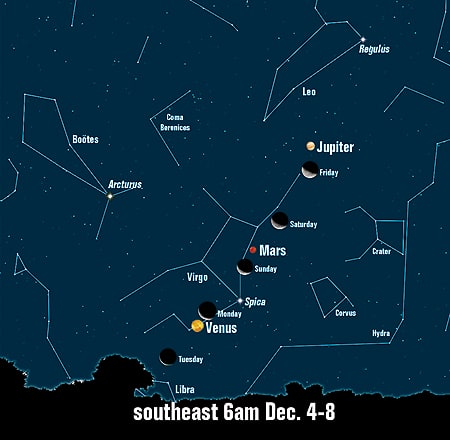
The waning crescent moon makes a brief appearance low in the southeast early Friday morning in the half-hour leading to sunrise, at 7:37. A few degrees higher shines the unmistakable light of Venus, just returned to view after slipping from evening to pre-dawn skies. Ten degrees higher still shines the blue-white star Spica, and above that is Saturn, as bright as any star. Saturday the new moon slips between earth and sun, disappearing from view amid the full glare of the sun. Sunday, as the...

Autumn’s full moons help dispel the impending darkness

Sunset Friday the 22nd, at 6:17, reveals the full Hunter’s Moon rising in the east. Like all full moons, this one rises with sunset and sets with sunrise, around 7:25 this week. The full moon is always juxtaposed to the sun with earth right in the middle. As sunlight washes over the other side of the world, it spills around the planet, striking the face of the moon head-on.  Think of yourself in a movie theater, with the projector beaming behind you. That light doesn’t brighten...

From Zeus’ paramour to Arthur’s kingdom

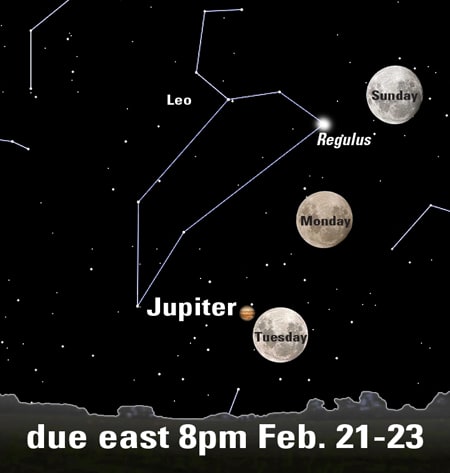
The waxing moon reaches first-quarter on the 14th, appearing due south as the sun sets, well before 6:30 this week, and setting around midnight. Each night the moon appears 15 degrees farther east at sunset, and each evening it sets almost an hour later. The night of the 19th, the gibbous moon passes six degrees north of brilliant Jupiter.  Jupiter, brighter than any star, beckons low in the east-southeast as darkness settles. Look for him high in the south around midnight and edging...

The always puzzling Draconids

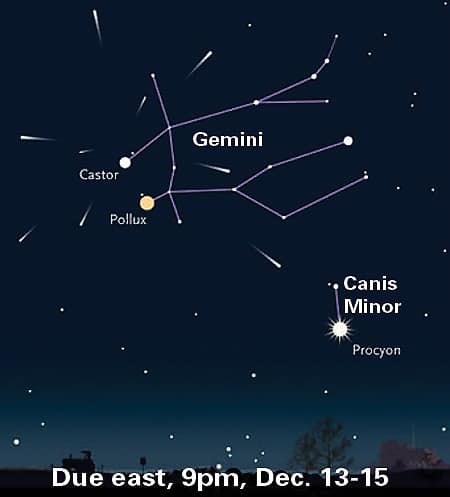
  Thursday’s new moon provides an unobscured backdrop for this year’s Draconid meteor shower, which peaks at week’s end. Not some early Halloween reference to Dracula, this annual meteor shower is named for the constellation Draco the dragon, from which the meteors seem to emanate. It’s tricky to predict the rate of the Draconids each year, but there is always the potential for some awesome stellar treats.  Like most meteor showers, the Draconids occur as earth...

The heavenly bull’s glare

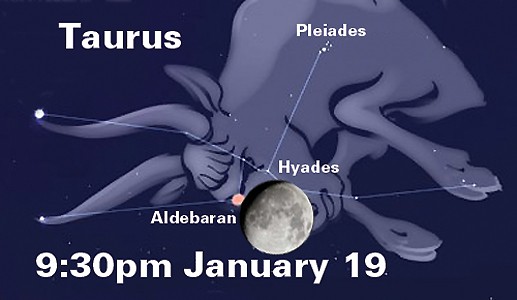
As darkness settles, the bright glow of Jupiter pierces the east-southeast horizon, by far the brightest light in the sky, as the moon spends this week waning through pre-dawn skies. The gaseous giant is high in the south at midnight, and as dawn nears, it sets beneath the western horizon. Around 10pm, the star Aldebaran rises in the east. The red glaring eye of Taurus the bull is one of the oldest recognized stars within one of the oldest recognized constellations. Among the paintings found on...

The sun’s lost ground is the skywatcher’s gain

  As if to hammer another nail into summer’s coffin, the sun this week sets before 7:00. The darkening sky reveals Venus tight above the southwest horizon, and while the evening star is brilliant at magnitude –4, it, too, is fleeting and sets shortly after the sun. As the sun and Venus set in the west, Jupiter rises in the east. Last week this gaseous giant reached opposition — its point opposite the sun as seen from our earthbound vantage — and so rises with sunset...

The sun’s lost ground is the skywatcher’s gain

  As if to hammer another nail into summer’s coffin, the sun this week sets before 7:00. The darkening sky reveals Venus tight above the southwest horizon, and while the evening star is brilliant at magnitude –4, it, too, is fleeting and sets shortly after the sun. As the sun and Venus set in the west, Jupiter rises in the east. Last week this gaseous giant reached opposition — its point opposite the sun as seen from our earthbound vantage — and so rises with sunset...

With the autumnal equinox, that footwear comes to life

Labor Day has come and gone, but the celestial clock still reads summer. While our days are still longer than our nights, we have lost two hours 45 minutes of sunlight over the past three months. After this week, the hours of darkness each day will trump those of light. In the late hours Wednesday, as the earth’s equator faces the sun head-on, all across the Bay region, a strange phenomenon takes place. It begins in dust-coated drawers throughout Eastport but then spreads quickly to...

There’s more to Shaula and Lesath than appears at first glance

Soon after sunset on September 10th and 11th, the nascent crescent moon joins Venus low in the west. These two are the first two lights to appear after sunset, around 7:20 Saturday, when Venus shines six degrees to the right of the moon. Sunday, the moon and Venus form a loose triangle with the dim star Zubenelgenubi in the constellation Libra. Monday, the waxing crescent moon shines just a few degrees to the west of Antares, the heart of Scorpius. A summer constellation traveling along the...
Syndicate content